Investing can be an exciting way to grow your money over time. With numerous options, it's easy to get caught up in the latest trends without fully understanding the potential downsides. Diving headfirst into any investment without proper knowledge or guidance can lead to costly lessons.
One popular investment vehicle that has gained attention in recent years is the Exchange-Traded Fund (ETF).
ETFs are investment funds traded on stock exchanges, like individual stocks. They offer investors a way to diversify their portfolios by investing in a basket of assets, like stocks, bonds, commodities, or a combination. While ETFs can be a convenient and cost-effective way to invest, they also come with challenges that every investor should understand before investing.
Let's understand the basics of ETF investing, what ETFs are, and how they work. By understanding these fundamentals, you'll be better prepared to make smart investing choices and avoid the common pitfalls of investing in ETFs without adequate knowledge.
A versatile tool for investors from rookies to experts
ETFs are great investment options for rookie investors who don't know much about investing. For example, market index ETFs offer instant basic diversification. Essentially, you are investing in each stock that makes up the market index.
But, because there are many types of ETFs that invest in a wide variety of assets, they are also suitable for all kinds of investors.
They can be a helpful tool in your investment toolkit, no matter what your goals are or how much risk you're willing to take on. You can hold onto ETFs for many years or trade them more frequently, depending on what works best for you.
ETFs are affordable, flexible and easily accessible for anyone to invest in. It's a bit like having a Swiss Army knife – versatile and useful in different situations, making it a handy tool for all types of investors.
The two management styles of ETFs: Passive and active
There are two management styles for ETFs: passively and actively managed. When deciding between passive and active ETFs, it's important to understand their differences.
Passively managed ETFs simply track a specific market index or benchmark, such as the S&P 500. They don't try to outperform the market; instead, they aim to match its performance. Think of passive ETFs as a mirror that reflects the market's ups and downs. Passive ETFs usually have lower fees.
On the other hand, active ETFs have a team of professionals who select investments to try and beat the market's performance.
While active ETFs might have the potential for higher returns, they also come with higher fees. Choosing between them is deciding whether you want a self-driving car that follows a set route or a car with a professional driver who can take you on a more personalised journey.
The cost advantage of ETFs: Lower fees for investors
ETFs typically have lower fees compared to mutual funds. When investing in ETFs, you'll incur some charges, but they're generally lower than those associated with mutual funds.
ETFs often cost less because they're like big piggy banks where many investors combine their funds, so everyone shares the expenses. Plus, since ETFs are traded on stock exchanges, the companies managing them don't have to pay commissions to salespeople.
Many ETFs simply track a market index without employing a team of expensive experts picking investments, which also helps keep costs down. These savings are then passed on to you, the investor.
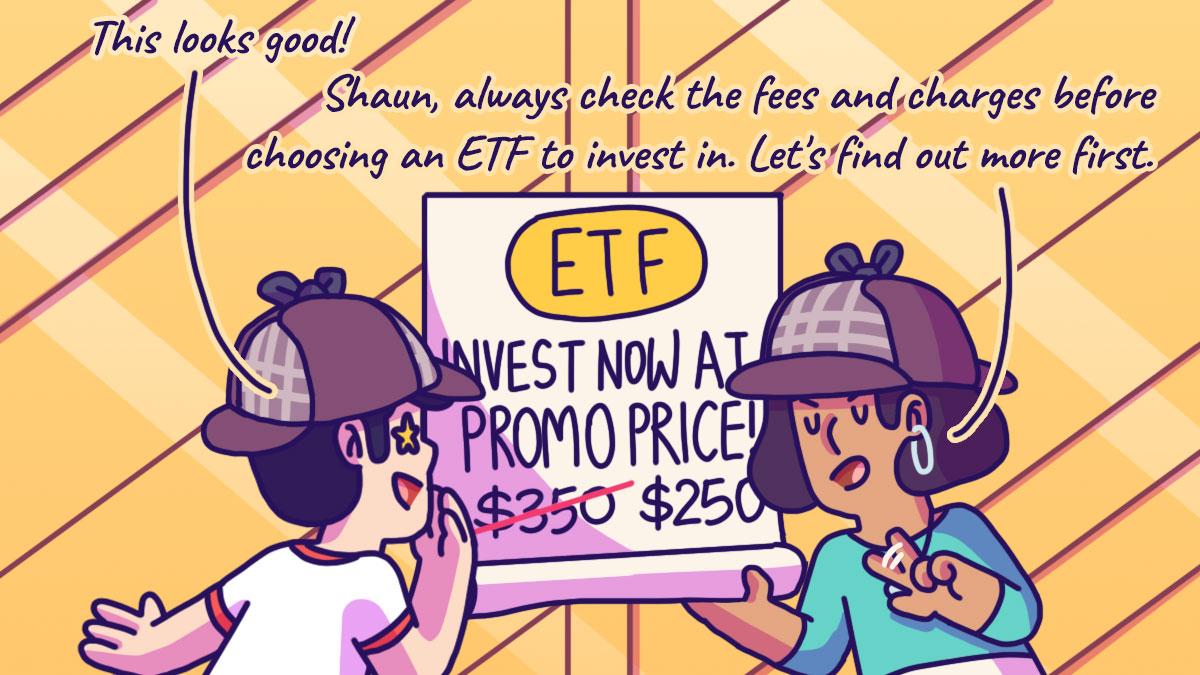
Be cautious! Some ETFs, particularly those with active management strategies, might charge higher fees. Always review the fees and charges before choosing an ETF to invest in. It's like being a savvy shopper – you want to get the best value for your money and avoid overpaying for something you could find at a better price elsewhere.
ETFs: Investment funds traded on stock exchanges
ETFs are popular investment vehicles that allow you to invest in a pre-assembled collection of assets, all bundled together into a single package.
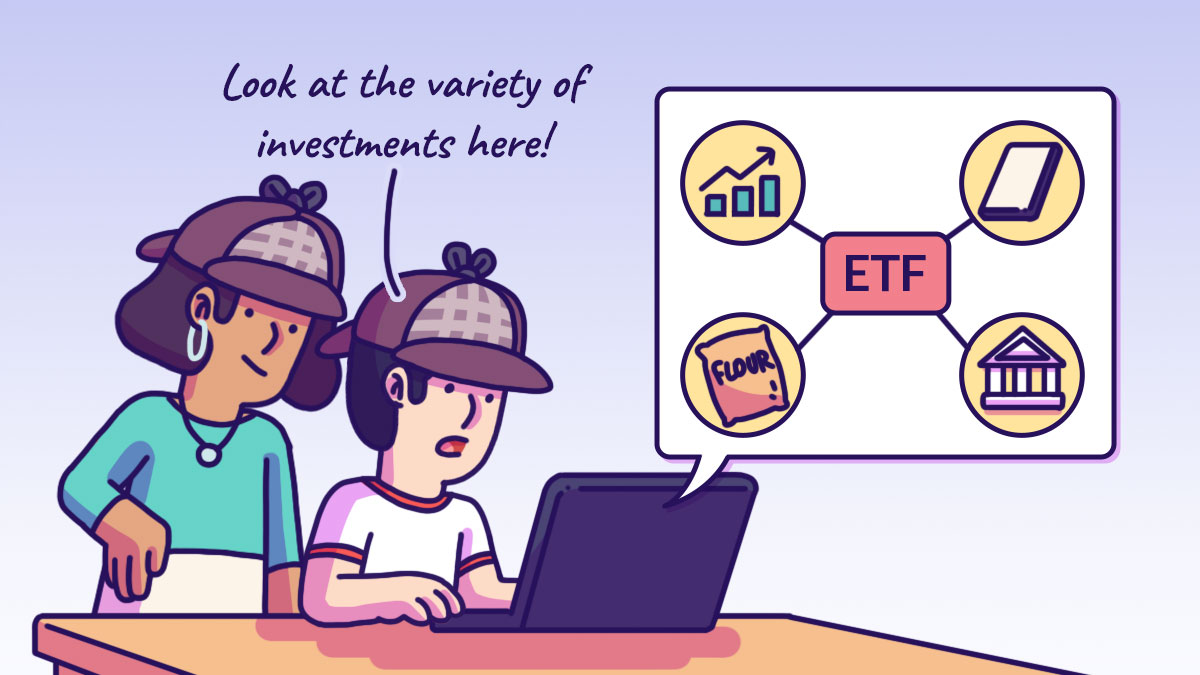
These packages, called investment funds, hold a variety of assets, such as stocks, bonds, commodities or a combination. This package is then traded on the stock market, making it easy to buy and sell, similar to individual stocks. The value of an ETF fluctuates with the ups and downs of the value of the asset types that are in the package. By investing in an ETF, you gain a small share of each investment within the fund, thereby instantly diversifying your portfolio.
Because ETFs are invested in a basket of assets, they help spread your risk across different types of investments without the hassle of buying each one separately, making it a more straightforward way to diversify your investment portfolio.
The diversification benefits and risks of ETFs
ETFs can help diversify your investments across different asset types, but they don't promise complete safety. All investments carry risks, some higher than others.
The level of protection you receive depends on the specific ETF you choose and the assets it holds. Some ETFs can be more volatile and riskier than others, with their value fluctuating more frequently.
That's why it's important to understand the type of investments an ETF holds. Think of an ETF like a seatbelt in a car – it can help keep you safer, but it doesn't eliminate the risk of injury if something goes wrong.
It's always advisable to thoroughly understand the risks before investing in any ETF.
Understanding how to diversify with ETFs
While ETFs generally provide diversification within their specific focus, investing in a single ETF may not give you comprehensive diversification across all asset classes. Some ETFs are concentrated in a single asset, such as Gold and Bitcoin ETFs.
If you want to spread your money across different types of assets, you'll need to invest in more than just one ETF. While most ETFs can help diversify your investments within a specific area, like technology stocks or US bonds, they won't give you the full benefits of diversification across all kinds of investments.
To truly diversify your portfolio, consider investing in a mix of ETFs that cover various asset types, markets, sectors, and geographical locations. The mix you choose should align with your financial goals and risk tolerance. Think of it like eating a balanced meal – you need different nutrients from a variety of food groups to stay healthy.
Understand the risks to ETFs
While investing in ETFs enables you to diversify your investments, you should also be aware of its risks. Different ETFs have varying risk levels, depending on the investments they hold.
For example, ETFs that concentrate on specific sectors, like technology, are exposed to the market risks of that sector. This means that any changes within the sector, such as a recession where tech might face a decrease in consumer spending, can influence the performance of the ETF. This volatility can cause fluctuations in the ETF’s price, impacting on the overall value of your investment.
With bond ETFs, which invest in a portfolio of bonds, there is a risk that some issuers might default. When this happens, it can lead to a loss of both income and principal for the bondholder. It can also affect the ETF’s value.
And while ETFs aim to replicate the performance of a benchmark index, they sometimes experience tracking error, which is when there are discrepancies between an ETF’s performance and the benchmark index. This is mainly due to management fees and transaction costs, both of which reduce your returns. These fees can erode your returns over time, so it's important to understand the costs associated with any ETF you are considering.
This content is part of the Temasek – Financial Times Challenge, a financial literacy education series in Singapore for youths.